



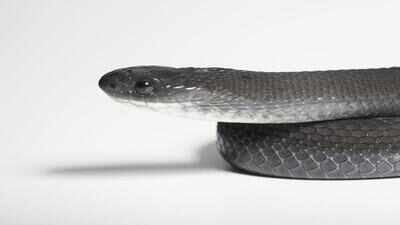
In a recent update, scientists have discovered a new species of snake in Ethiopia’s Harenna Forest. At first, they couldn’t believe it’s a new species but as the snake grew, its physical characteristics began to raise questions. Then followed a seven-year investigation which involved field observations, captive breeding, detailed measurements and genetic testing. The research eventually confirmed that the snake represents a previously unknown species.The findings were published in the open-access journal Herpetozoa by researchers Arthur Tiutenko, Tim L. Heller and Michael F. Bates.Name of the snake The new species has been named Dasypeltis albigularis. The common name given to the snake is White-throated Egg-eater. It refers to the pale colour of its throat and the front part of its underside.It was first mistaken for another snake
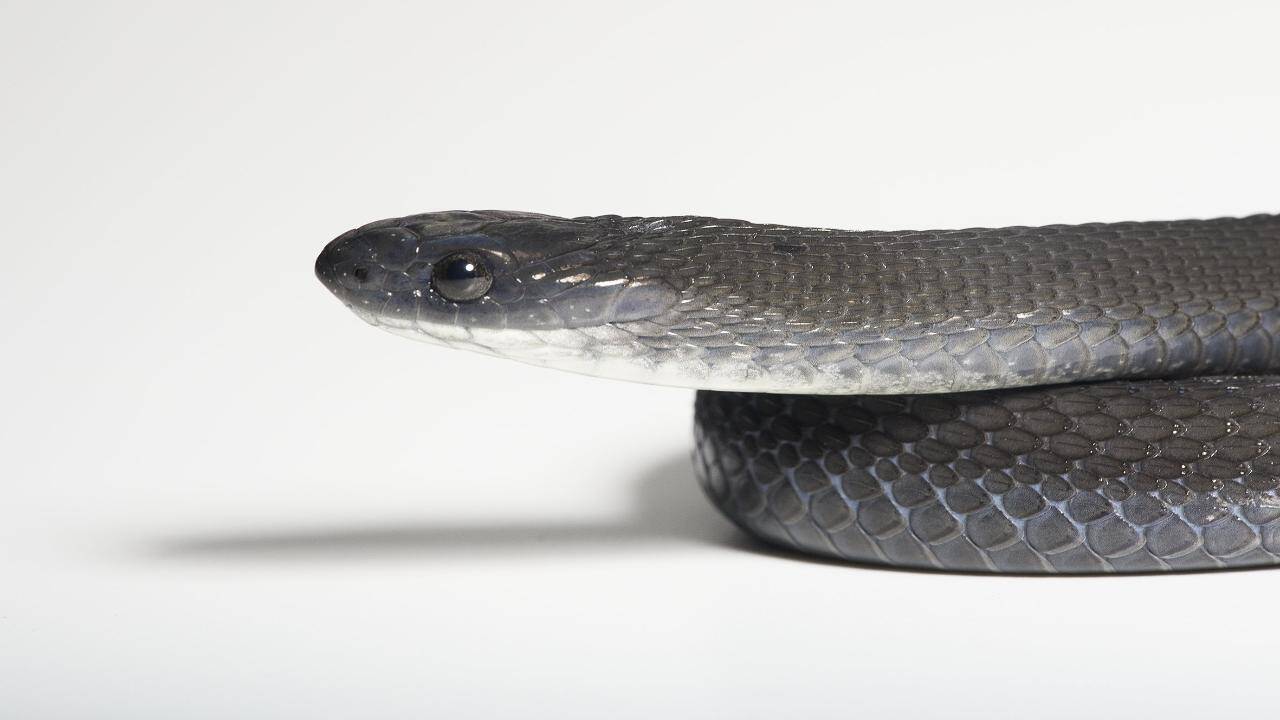
New snake species discovered in Ethiopia (X)
So, the discovery story began in 2019. It was researcher Arthur Tiutenko who received a young female egg-eating snake from the Harenna Forest which looked like it belonged to Dasypeltis atra. It is a closely related species also known as the montane egg-eater.However, the identification became less certain as the snake matured.“As she grew to adult size, I noticed morphological differences,” Tiutenko said, according to the research coverage. Scientists then began comparing the snake with related species and studied its behaviour, breeding biology and DNA.The researchers eventually examined 16 specimens from the Harenna Forest, including males and females. Genetic analysis using both mitochondrial and nuclear markers placed the Harenna snake as a close relative, or sister species, of D. atra, but as a separate evolutionary lineage. The genetic differences were comparable to or greater than differences seen between some already recognised Dasypeltis species.Scientists even studied its offspringThe research involved captive breeding. The female found in Harenna Forest was paired with a male D. atra from Mount Kenya in 2022. The offspring displayed a mixture of characteristics from both parents. Researchers used these observations alongside the physical and genetic evidence while working out the snake’s identity.The study, which began in 2019, ultimately took seven years to complete. The formal scientific description was published in Herpetozoa on August 27, 2026.What does the new snake look like?Dasypeltis albigularis is a medium-sized snake. Females can reach about 92 cm, while males are generally smaller, reaching less than 60 cm. Most individuals are dark grey or black on the upper body.However, some can be brown or reddish-brown, with darker markings and small white spots. One of the more distinctive features is the pale skin between the scales, which can appear bluish in adults. Its throat and the front portion of its underside are predominantly white, giving the snake its common and scientific name.What it eatsThe new species belongs to the genus Dasypeltis, a group of African snakes specially adapted to a diet of bird eggs. Unlike snakes that kill and swallow prey, these snakes do not need to overpower birds. They search for nests and swallow eggs whole.The remarkable part comes after the egg enters the snake’s throatThe snake has highly specialised projections on some of its vertebrae. These bony structures extend towards the oesophagus, the tube connecting the mouth to the stomach. As the snake moves and contracts its body, the swallowed egg is pressed against these structures, causing the shell to crack.The snake then swallows the nutritious liquid inside the egg while the crushed shell is eventually brought back up.To simplify this, the snake carries its own egg-cracking mechanism inside its body.Its diet consists of bird eggs of suitable size, with relatively soft-shelled eggs from tree-nesting birds preferred. Larger females can consume eggs approaching the size of a small chicken egg.The discovery is another reminder that even well-studied groups can contain species that are easy to overlook. Many Dasypeltis snakes have similar dark or muted colours, making identification from appearance alone difficult.